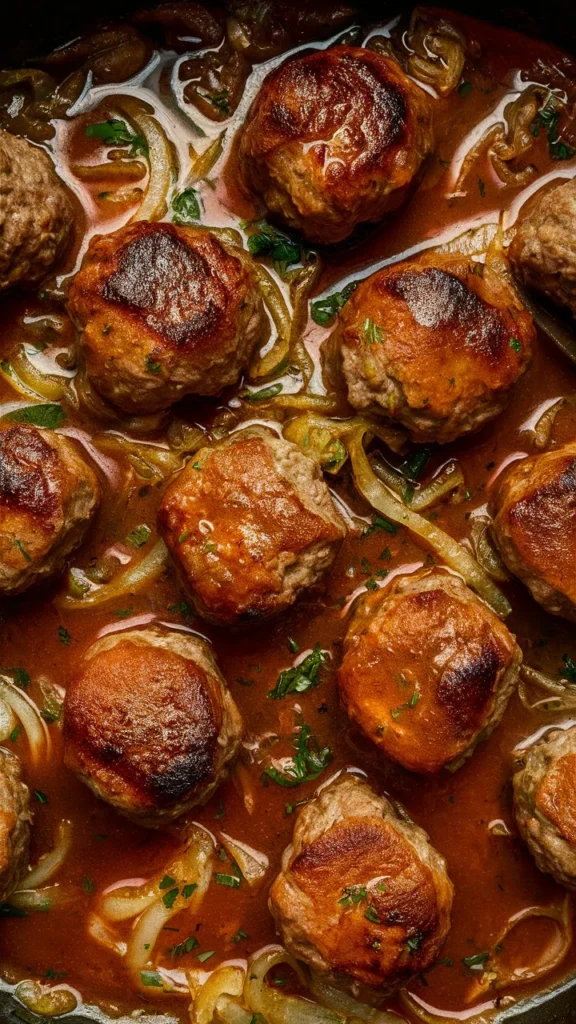

Some recipes feel like home from the very first bite. French Onion Meatballs are one of those dishes — warm, savory, aromatic, and deeply satisfying. They transform simple ingredients such as beef, onions, broth, butter, and herbs into a meal that feels both rustic and luxurious.
If you’ve ever enjoyed a bowl of French onion soup bubbling under a layer of golden cheese, imagine that same depth of flavor wrapped around tender, juicy meatballs. Now add a tomato-onion base, layers of caramel sweetness, and slow-simmered richness. The result? A dish that feels fancy enough for a dinner party and comforting enough for a rainy-night craving.
In this complete guide, written entirely from scratch for clarity, originality, and maximum helpfulness, you’ll find everything you need to make this dish shine — step-by-step instructions, cooking science, variations, serving ideas, troubleshooting, storage tips, and more. The goal is to equip you with not just a recipe, but a full understanding of how to elevate French Onion Meatballs into a signature dish worth repeating again and again.
The Heart of the Dish: Why French Onion Meatballs Stand Out
Many comfort foods rely on heavy creams or excess cheese. But this dish delivers depth through technique rather than weight. The core lies in three major elements:
1. Properly Caramelized Onions
Caramelizing onions isn’t just “cooking onions longer.” It’s a slow transformation where natural sugars darken, soften, and sweeten. When done right, onions lose their sharpness and take on a jam-like consistency with a golden amber hue.
These onions bring:
- sweetness
- richness
- savory intensity
- aromatic complexity
They form the backbone of the sauce.
2. Tender and Flavorful Meatballs
Good meatballs should be:
- juicy, not dense
- seasoned but not overpowering
- lightly bound, not packed tight
- beautifully browned
Seasonings like thyme, garlic powder, onion powder, and Parmesan add depth without overshadowing the onions.
3. A Luxurious Tomato-Onion Sauce
Unlike typical marinara, this sauce is:
- deeper
- sweeter
- richer
- more layered
The tomatoes are enhanced with beef broth, caramelized onions, and herbs, creating a slow-simmered sauce that clings to each meatball.
Together, these three components create a dish where every bite tastes warm, soulful, and incredibly satisfying.
Ingredients Breakdown: Understanding Each Component
A recipe is only as balanced as the ingredients within it. Here’s a deeper look at the components and why they matter.
Onions: The Star Ingredient
Yellow onions are ideal because:
- they caramelize evenly
- their natural sugar content is perfect
- their flavor mellows beautifully
Avoid sweet onions — they caramelize too quickly and become sticky.
Butter
Butter adds flavor, richness, and a classic French profile.
Ground Beef
Choose meat with at least 80% lean / 20% fat for juiciness.
Breadcrumbs + Egg
These bind the meatballs without making them dense.
Parmesan
Adds umami and a subtle nuttiness.
Thyme
A classic herb that pairs perfectly with onions.
Crushed Tomatoes
They bring structure to the sauce without dominating it.
Beef Broth
Deepens the savory notes and prevents dryness.
Flour for Coating Meatballs
This helps achieve:
- a better sear
- a lightly thickened sauce
Skipping it is fine, but the dish becomes slightly less velvety.
Step-by-Step: The Complete Cooking Process
This detailed guide expands on each stage so you understand not just what to do, but why it matters.
1. Caramelizing the Onions (30–40 Minutes)
Start with thinly sliced onions and butter over medium heat. The secret is patience — onions should soften slowly so their natural sugars break down evenly.
Stir them often enough to prevent burning but avoid constant movement, which prevents proper browning.
Add sherry or broth once they’re deep golden. This deglazes the pot and gathers all the flavorful bits stuck at the bottom.
This step is the foundation of the entire dish.
2. Preparing the Meatball Mixture
Combine:
- ground beef
- breadcrumbs
- Parmesan
- egg
- thyme
- garlic powder
- onion powder
Mixing lightly keeps the texture tender. Overmixing compresses the meat and creates tough meatballs.
Form 1-inch balls for a perfect bite-size consistency.
3. Coating and Browning
Dust lightly in flour, then sear in olive oil. Browning builds:
- color
- flavor
- texture
This is where the dish gains its savory depth.
4. Building the Sauce
Add the onions back in, then tomatoes, broth, and a bay leaf.
The mixture should simmer gently for at least one hour. This time allows:
- onions to melt into the sauce
- meatballs to absorb flavor
- liquids to reduce and thicken
5. Final Taste Adjustment
Before serving, check for:
- salt
- pepper
- acidity
- sweetness
A splash of broth can lighten the sauce; a sprinkle of herbs freshens it.
Flavor Variations: Creative Twists to Try
This dish is versatile. Here are original variations:
1. Creamy French Onion Meatballs
Finish with a splash of cream or crème fraîche for a richer profile.
2. Spicy Variation
Add red pepper flakes or chili paste to give the sauce mild heat.
3. Herb-Forward Version
Swap thyme for rosemary or oregano for a more Mediterranean approach.
4. Lighter Protein Options
Use ground turkey or chicken for a healthier version.
5. Cheesy French Onion Meatballs
Top with melted Gruyère or mozzarella for a French onion soup effect.
6. Gluten-Free Option
Use:
- almond flour instead of breadcrumbs
- gluten-free flour for coating
Serving Ideas: How to Enjoy French Onion Meatballs
This dish is incredibly flexible. Serve it with:
- creamy mashed potatoes
- egg noodles
- buttered pasta
- rice
- crusty sourdough
- polenta
- garlic toast
- steamed vegetables
For a more elegant presentation, try:
- individual bowls topped with fresh parsley
- cast-iron skillet presentation for rustic appeal
- pairing with a fresh green salad
Expert Tips for Perfect Meatballs Every Time
✔ Don’t Overmix
Gentle mixing = tender texture.
✔ Use the Right Pan
A Dutch oven retains heat and distributes it evenly.
✔ Keep the Heat Moderate
Too high and onions burn instead of caramelizing.
✔ Brown in Batches
Crowded pans cause steaming, not searing.
✔ Taste as You Go
Balanced seasoning transforms a good dish into a great one.
Troubleshooting: Common Mistakes and Fixes
Onions Burn Too Fast
Lower heat and add a splash of water or broth.
Meatballs Fall Apart
Add a bit more breadcrumbs or let mixture rest before shaping.
Sauce Too Thick
Stir in additional broth.
Sauce Too Thin
Simmer uncovered for 10–15 minutes.
Bland Flavor
Add a pinch of salt, thyme, or a splash of broth for depth.
Storage, Reheating, and Make-Ahead Tips
Refrigeration
Store 3–4 days in an airtight container.
Freezing
Freeze fully cooked meatballs with sauce for up to 3 months.
Reheating
Warm on the stove with a splash of broth to loosen the sauce.
Make-Ahead
Form meatballs ahead and refrigerate up to 24 hours before cooking.
Frequently Asked Questions
Can I speed up onion caramelization?
You can increase the heat slightly after they soften, but full caramelization requires patience for the best flavor.
Can I use fresh herbs?
Absolutely — thyme, rosemary, and parsley work beautifully.
Is sherry necessary?
No. Beef broth works great and keeps the dish family-friendly.
Can I double the recipe?
Yes — just brown meatballs in multiple batches and use a large pot.
Can I make this dish dairy-free?
Skip Parmesan and use olive oil instead of butter. The flavor remains delicious.
Conclusion: A Dish Worth Returning To
French Onion Meatballs bring together the best qualities of comfort cooking — depth, aroma, warmth, and satisfaction. With slow-cooked onions, tender meatballs, and a rich sauce, this recipe transforms simple ingredients into something memorable. Whether you serve it for a cozy family dinner or a special gathering, it offers a homey, elegant experience that appeals to everyone.